

한국의 꽃
FLOWERS OF KOREA
마틴 게바라 Martín Guevara
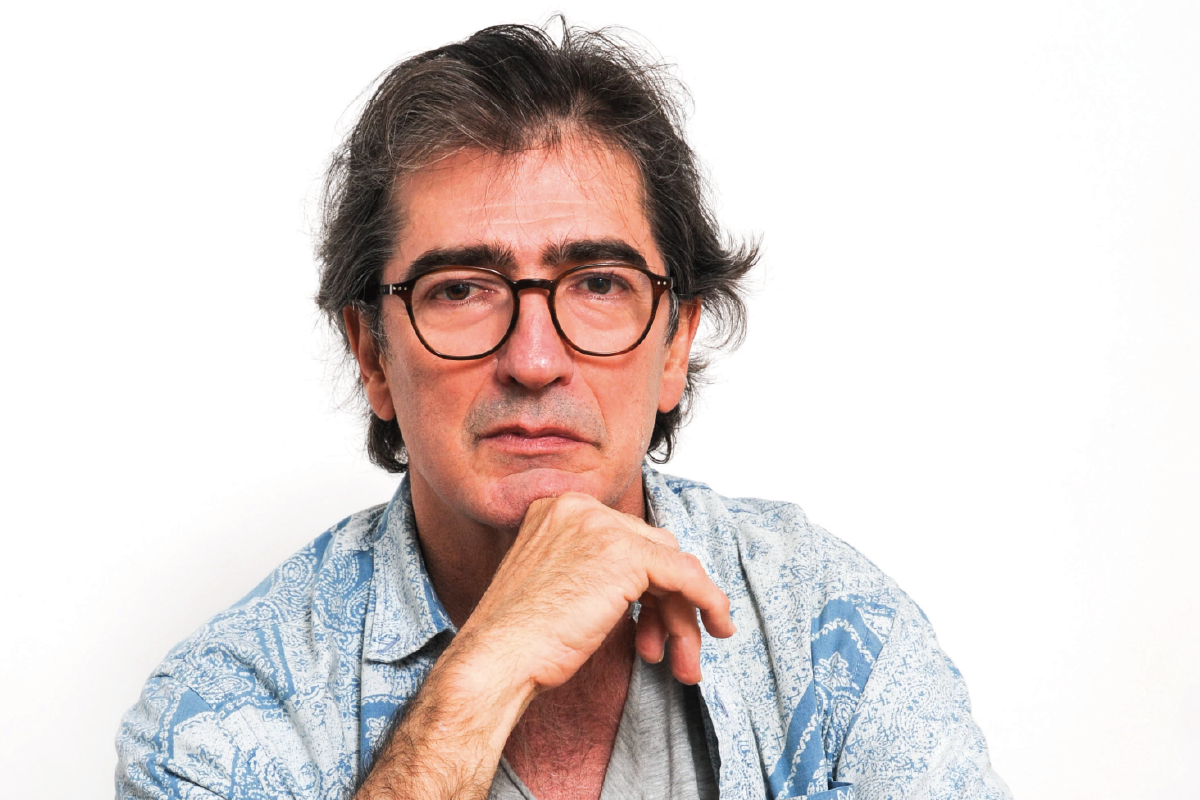
마틴 게바라(Martín Guevara)는 아르헨티나 출신 쿠바의 정치가이자 혁명가였던 체 게바라(Che Guevara, 1928~1967)의 조카로 스페인에서 체 게바라 연구자 및 작가로 활동하고 있다.
Martin Guevara is a nephew of Che Guevara(1928~1967) who was an Argentinian_born Cuban politician and revolutionary. He currently lives in Spain and works as an author and a researcher of his uncle, Che Guevara.
이 글은 2022년 12월 4일부터 6일까지 황토현전적(사적 295호) 일대에 조성된 동학농민혁명기념공원(교육관)에서 정읍시 주최로 「제1회 세계혁명도시 연대회의」에 참가했던 마틴 게바라에게 동학농민혁명기념재단 소식지 『녹두꽃』 편집자가 이메일로 원고를 요청하여 게재하게 되었다.
This article was written by Mr. Martín Guevara for the Donghak Peasant Revolution Foundation as the article in 『Nokdukkot(Mung beans Flower』, a newsletter of the Donghak Peasant Revolution Foundation. The editor of the newsletter requested this article by e-mail and published it. Mr. Martín Guevara participated in 「The 1st World Revolutionary City Joint Conference」 hosted in Jeongeup City at the Donghak Peasant Revolution Memorial Park built in the area of Hwangtohyeon battlefield (Historic Site No. 295) from December 4 to 6, 2022.
* 독자의 이해를 돕고자 한국사 맥락 등을 감안하여 작가의 동의를 받아 일부 보완하여 『녹두꽃』 편집자가 번역하였다.
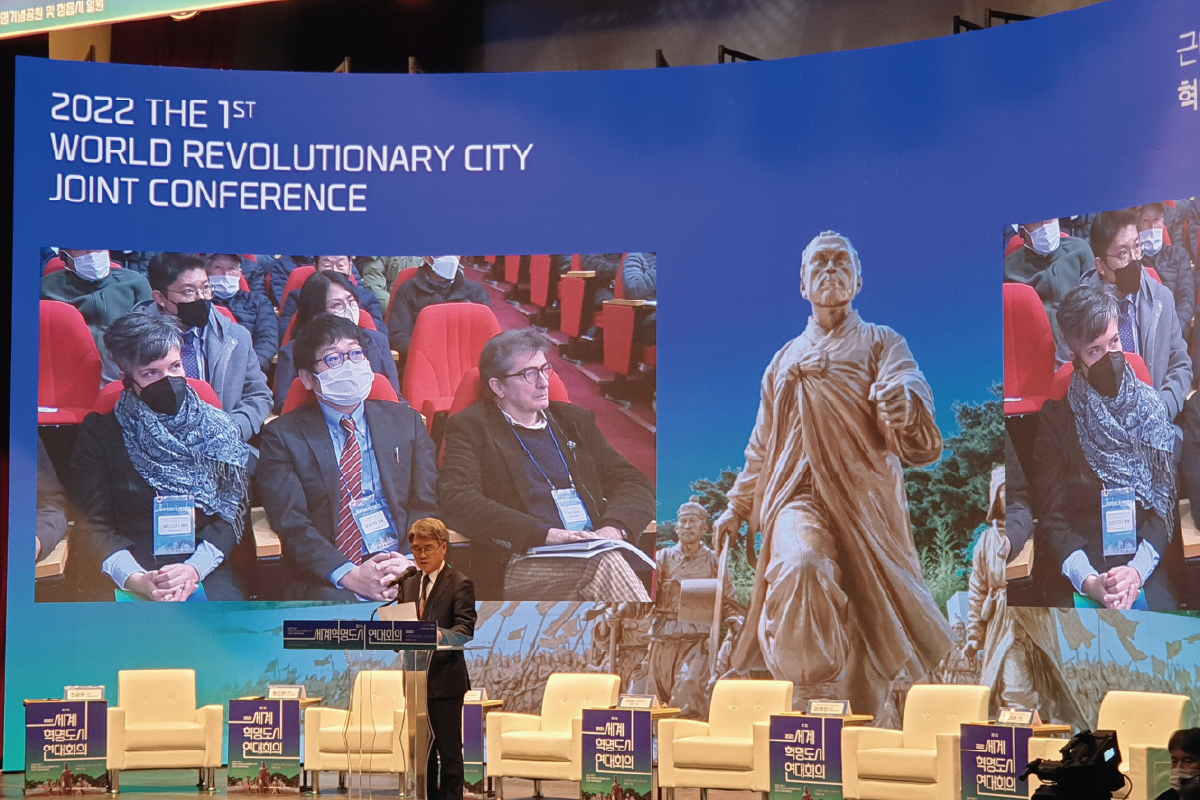
제1회 세계혁명도시 연대회의 (동학농민혁명기념관, 2022.12.5.)
20세기 중반기만 해도 한국전쟁 등으로 아주 빈곤한 나라 중 하나였던 한국은 그로부터 반세기를 넘어오면서 역동적인 변화를 거쳐 다양한 삶이 공존하는, 국민 모두에게 기회가 열려있는 나라로 비약적인 발전을 이루었다. 집값은 다소 비싸지만 수많은 사람이 거주하는 수도 서울과 아름답고 평화로운 작은 도시와 마을이 있다. 또한 한국은 자동차, 전자기술, 고급 전화기, 텔레비전, 품격 있는 영화(映畫), 의류 등 여러 분야에서 세계를 선도하는 수십 개의 브랜드를 가진 나라이다. 때문에 다소 압도적으로 느껴질 수 있지만 일반적으로 세계의 많은 사람은 한국의 발전과 그 발전을 추동하는 역량에 감탄한다.
그렇지만 선진국으로 도약한 한국의 내면을 살펴보면 아픔 또한 많다. 1950년 피비린내 나는 한국전쟁으로 3백만여 명이 목숨을 잃었고, 나라는 둘로 나뉘었다. 그때 분단된 나라는 지금도 남과 북으로 갈라져 있다. 남과 북으로 나뉜 나라는 이념과 체제를 달리하여 첨예하게 대치, 극심한 긴장 관계에 놓여 있다. 한국전쟁 이후 남한은 자유민주주의 기치 아래 자본주의를 추구하여 눈부신 발전을 통해 선진국으로 진입하였다. 그러나 기업가와 개인 모두 잘 사는 낙원인가 하는 점에는 논의의 여지가 많다. 그리고 북한은 노동자, 농민의 이상이 실현되는 사회주의 모범국가, 계급이 없는 평등한 나라를 실현했다고 말하고 있지만 그 사실여부 또한 논란이 많다.
Korea made a vertiginous leap from being one of the poorest countries to one of the most prosperous, with a dynamic, extremely fun, diverse life, full of possibilities for its large number of inhabitants, with a capital certainly crowded with people where housing it is somewhat expensive but with many smaller cities and even towns where you can develop and live an intense, beautiful and peaceful life. Dozens of leading international brands in automobiles, electronics, high-end telephones, televisions, an impeccable film and series production, clothing, all sorts of items, create the sensation of a development that may be overwhelming for some, but that generally arouses international admiration.
But it was not always like this. Not only because there was a cruel war between the divided country and which resulted in the bloody number of three million lives taken. Under the promise that the north would be the homeland of the proletarians and the peasants in oases of concord, something that over time was subjected to at least one insured more than debatable and the south supported by the capitalist powers would be the paradise of entrepreneurs and meritorious individuals, something also, that like everything, in the long run admits more than one debate.
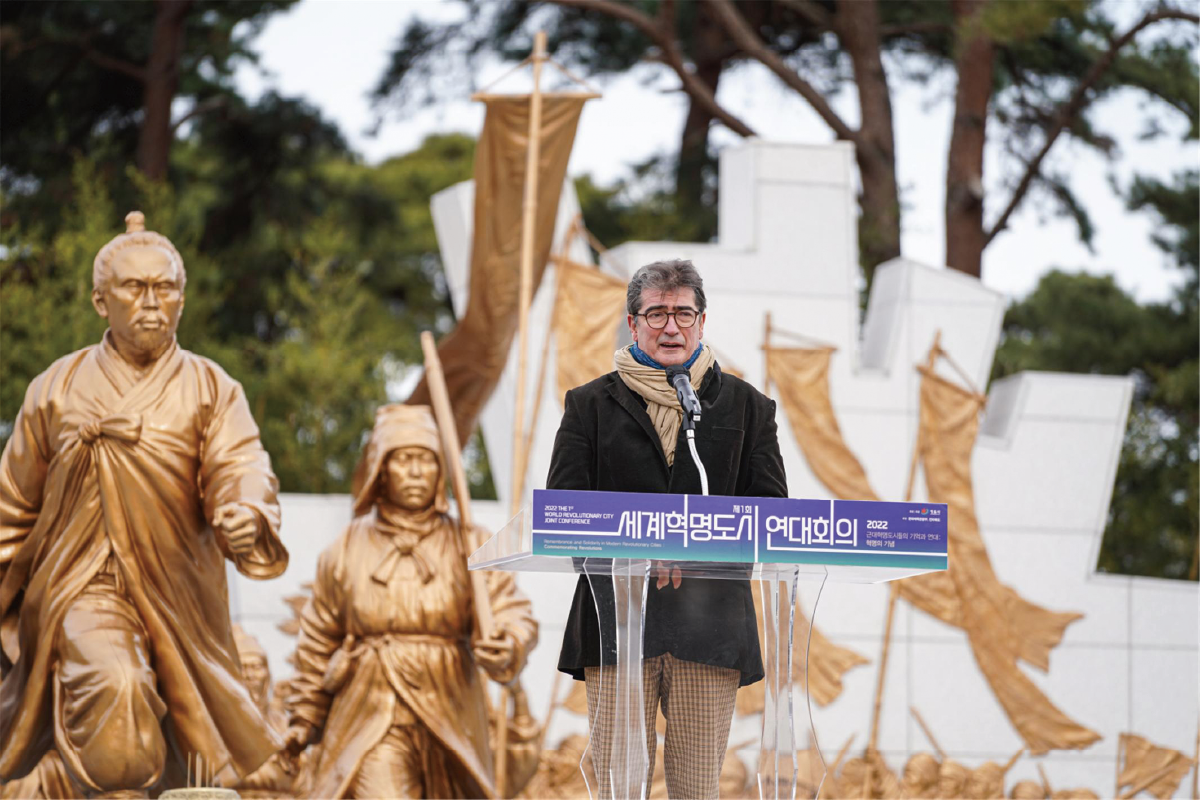
인사말 중인 마틴 게바라(전북 정읍 황토현 전적 내(內) 불멸, 바람길 군상 앞, 2022.12.5.)
19세기 전반에 걸쳐 한국(조선)은 수많은 농민해방투쟁이 치열하게 전개되었다. 평범한 수많은 사람이 자유의 이념 아래 모여 어떤 희생이 있더라도 봉건 정부의 폭정에 맞서 공정한 부의 분배와 인간의 존엄성을 지키고자 투쟁하였고, 일본을 비롯한 서구 제국주의 열강의 침략에 맞서 치열하게 싸웠다. 그때의 치열했던 전장은 한국 국민에게 가장 영예로운 곳으로 각인되어 있다. 19세기 조선의 농민해방투쟁은 1811년 관서농민전쟁(홍경래의 난)을 시작으로 1894~1895년 전봉준이 이끈 동학농민혁명으로 19세기, 한 세기에 걸쳐 면면히 이어졌다.
나는, 나의 삼촌인 에네스토 “체”게바라(1928~1967, 쿠바 혁명가)의 세계 혁명과 근원적인 관계를 모색하기 위한, 코로나 팬더믹이라는 상황으로 인하여 온라인으로 진행된 국제 행사에 두 차례 초청을 받아 참여하였다. 그 첫 번째는 “하나, 둘, 셋 베트남 만들기”, 그 두 번째는 “영화와 문학으로 본 체 게바라”라는 주제였다. 이후 2022년 말 동학농민혁명을 기념하기 위해 ‘제1회 세계혁명도시 연대회의’라는 특별한 주제로 정읍국제포럼에 초청받아 라틴 아메리카 혁명의 상징이자 발상지인 “알타그라시아(Altagracia)”라는 작품을 선보일 수 있었다.
동학농민혁명기념관과 드넓고 아름다운 공원, 기념 기둥(조형물_울림의 기둥), 전봉준 장군이 선도하는 동학농민군 행렬을 모티브로 제작한 ‘전봉준 장군과 동학농민군상’ 앞에서 나는 깊은 책임감을 느꼈다. 또한, 세계 다른 지역의 혁명가를 기리는 일에 최선을 다하라는 삼촌의 말이 나의 핏줄을 타고 생생하게 울려오는 것만 같았다. 삼촌과 모든 나라 혁명가들이 꾼 꿈, 유토피아, 정의에 대한 갈망, 학대에 대한 분노는 공간과 시대를 넘어 인류의 삶의 보편적인 이념이자 지향이기 때문일 것이다.
Throughout the 19th century, Korea was a field where the fiercest struggles were settled during different emancipations of the peasantry, where the organization of humble men and women took place around the idea of freedom from the dominant domination, from foreign armies such as the Japanese, of the Western powers, of the distribution of wealth in a fairer way and of obtaining a degree of dignity, which, although it requires the greatest of sacrifices, remains in the most honorable place of the peoples forever. This was the 19th century from beginning to end beginning in 1811 with the preparation of the first rebellion, the Gwanseo Peasant War and concluding in 1895 with the Donhak Peasant Revolution led by Jeon Bong Jun.
In order to address the evident and underlying relationship of this revolution with the revolutions that my uncle Ernesto “Che” Guevara fought for, I was honored with an invitation to do a job via Zoom in times of the Covid 19 pandemic, on two occasions, the the first with the work “Create one, two, three Vietnam” and the second “Che Guevara in cinema and literature”. At the end of 2022 I was personally invited to participate in the Jeongeup International Forum on the Commemoration of Donghak Revolution with the particular theme of The 1st World Revolutionary City Joint Conference, I attended it feeling deeply honored, this time with the work "Altagracia” as the birthplace of the revolutionary icon of Latin America.
The first impression upon seeing the Donhak Revolution Memorial, the huge and beautiful park, the commemorative columns, the statues of the peasant warriors led on the front line by Jeon Bong Jun, was a feeling of deep responsibility, I felt as if within my veins a conversation took place, a meeting of my uncle with me, he asking me to do the best possible role to honor that revolutionary from the other part of the world, but with the exact same dreams, utopias, desire for justice and rage against abuse that he and that all the revolutionaries of the world in all times fought for.
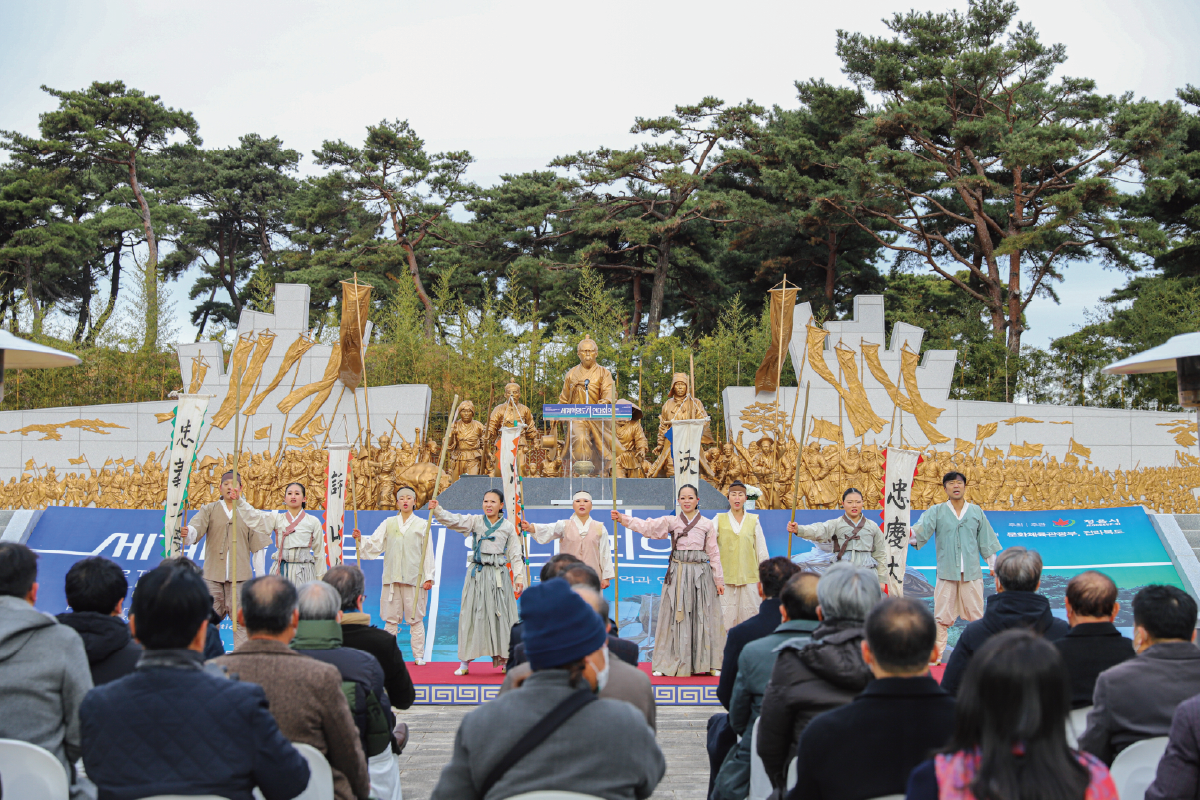
동학농민혁명 대서사시, 창무극 '천명' 갈라쇼
제1회 세계혁명도시 연대회의 관계자들은 매우 따뜻하고 정중하게 환대해주었다. 서울에서는 오레알(Oreal) 씨가 맞이해주었고, 전주에서는 김승수 전북도 사무관(Sonny Kim)이 친절하게 맞아주었다. 그리고 정읍시에 도착하여 연대회의 행사 관계자인 원도연 교수(원광대학교)와 문병학 부장(동학농민혁명기념재단)을 직접 만날 수 있었다. 나는 김승수 사무관의 호의로 훌륭한 한국 음식을 맛보았고, 다음날 독일 뮐호이저(Muhlhauser) 박물관 대표단과 함께 아름다운 옛 도시, 전주시(全州市)를 여행하면서 다양한 종교와 문화가 공존하고 있는 전주의 역사에 대해 배울 수 있었다.
정읍시에 소재한 동학농민혁명기념관 관계자의 접대는 매우 따뜻하고 섬세하였으며 우리는 짐을 놓고 지역의 정치, 문화, 관계자들이 있는 대규모 연회에 참석하였다. 연회에서 돌아온 나는 신비로운 분위기가 깃든 밤에 동학농민혁명기념공원 곳곳을 둘러보았다. 전봉준 장군과 동학농민군을 기리기 위한 기념조형물(불멸, 바람길 군상) 앞에서 행사가 있는 아침나절은 매우 추웠으며 조용히 담소를 나누며 행사가 열리는 곳으로 갔다. 그곳에는 여러 줄의 의자, 이동식 난로 그리고 아름다운 한국의 전통춤이 준비되어 있었고 정읍시장의 연설, 내빈 인사말, 헌화가 진지하고 엄숙하게 진행되었다. 행사 내내 나는 피가 역동적으로 움직이는 것을 느낄 수 있었다. 나의 삼촌이 살아 숨 쉬는 것만 같았다. 수많은 불의에 항거했을 뿐 아니라 한국 전역에 수많은 꽃이 피어날 수 있도록 씨앗을 뿌린 동학농민군의 용기와 그들의 숭고한 정신에 나는 존경심이 들었다. 나의 등골에 전류가 흐르는 것처럼 찌릿했다. 무대 위에 펼쳐진 공연(창무극_천명)은 기법적인 면에서 뿐만이 아니라 모든 면에서 흠잡을 데가 없는 세계적인 수준의 작품으로 감동적이었다. 이 작품은 지구상의 한 사건(동학농민혁명)을 기억하기 위해 제작된 거대한 프로젝트였다. 이어 우리는 전봉준(장군)이 살았던 집을 방문하였는데 이곳에서 투쟁과 항거뿐 아니라 고택 곳곳에 깃들어 있는 가족애, 일상생활 등을 엿볼 수 있어서 아주 큰 감동을 받았다. 이번 방한 기간에 한국 국민이 가르쳐준 모든 것과 위대하고 아름다운 나라, 한국을 사랑할 수 있게 해준 것에 대해 깊이 감사드린다.
From the beginning, the reception was very courteous and warm in Seoul itself by Ms. Oreal, from there I went to Jeonju where Sonny Kim was waiting for me with his usual good treatment, whom I finally met in person, who received me on behalf of the office of Prof. Won and Mr. Moon. I tried the exquisite Korean food, courtesy of Sonny, the next day we were joined by the representative of the Muhlhauser Museum of Germany, we toured the beautiful old city of Jeonju learning its history and the exemplary coexistence of different religions and cultures.
The reception at the Donhak Revolution Memorial hall was equally warm, precise, once we left our bags, we were taken to a meal, in which we were honored with a large banquet presided over by different political, cultural and business personalities from the area. Once we got back, I went for a walk around the entire Memorial area, enveloping the night in a mystical air. The morning of the event in front of the monument in honor of Jeon Bong Jun and the rebellious peasants was cold, we walked in silence, or talking softly, to the monument where several rows of chairs and portable stoves were waiting for us, a beautiful traditional dance was waiting for us and then a the mayor's speech, a few words from each guest, including some from this humble servant, and then we made the floral offering, at which point, in the morning cold that invited a hieratic attitude, not jocular, but silent and dee serious rictus, and between the presence of my uncle in my veins, I felt a familiarity carved in respect with all those men and women who had the courage and integrity, not only to rebel against so much injustice, but to sow a seed that would germinate in millions. of flowers throughout Korea. I felt a current go through my spinal cord. The act in the theater was impeccable in every way, emotional, high quality of the Korean and international exhibitions, and the technical aspect was impeccable. The work that has been carried out to maintain the memory of an episode deeply linked to the earth has been a titanic task. The visit to Jeon Bong Jun's house was for me a moment of great emotion, a connection not only with the struggle, with the demands, but also with family love, work, daily life here and everywhere. My gratitude for being so honored is comparable to everything I've learned about the people of Korea, and the love I've grown for that great and beautiful country.
변역: 오진경(『녹두꽃』 편집자)

